A motorcycle gear guide
What to know when buying your first motorcycle helmet

This one is a ‘no-brainer.’ And anyone who would ever argue against wearing a helmet on a motorcycle could fall under that category as well — quite literally, as a matter of fact. If you suffer an accident on a motorcycle without a helmet, there’s a very good chance that you can kiss your brain goodbye — literally turning you into a ‘no-brainer.’ Fortunately, there are plenty of excellent helmets out there in all sorts of cool varieties to make sure that noggin of yours is not going anywhere. This motorcycle helmet buyer’s guide let’s you get your head into all of them before purchasing one.
📦 Affiliate Disclosure:
Some of the links in this article are affiliate links — if you click and buy, I may earn a small commission at no extra cost to you. It helps support the channel and future content 🙌
The Types Of Helmets You Can Buy
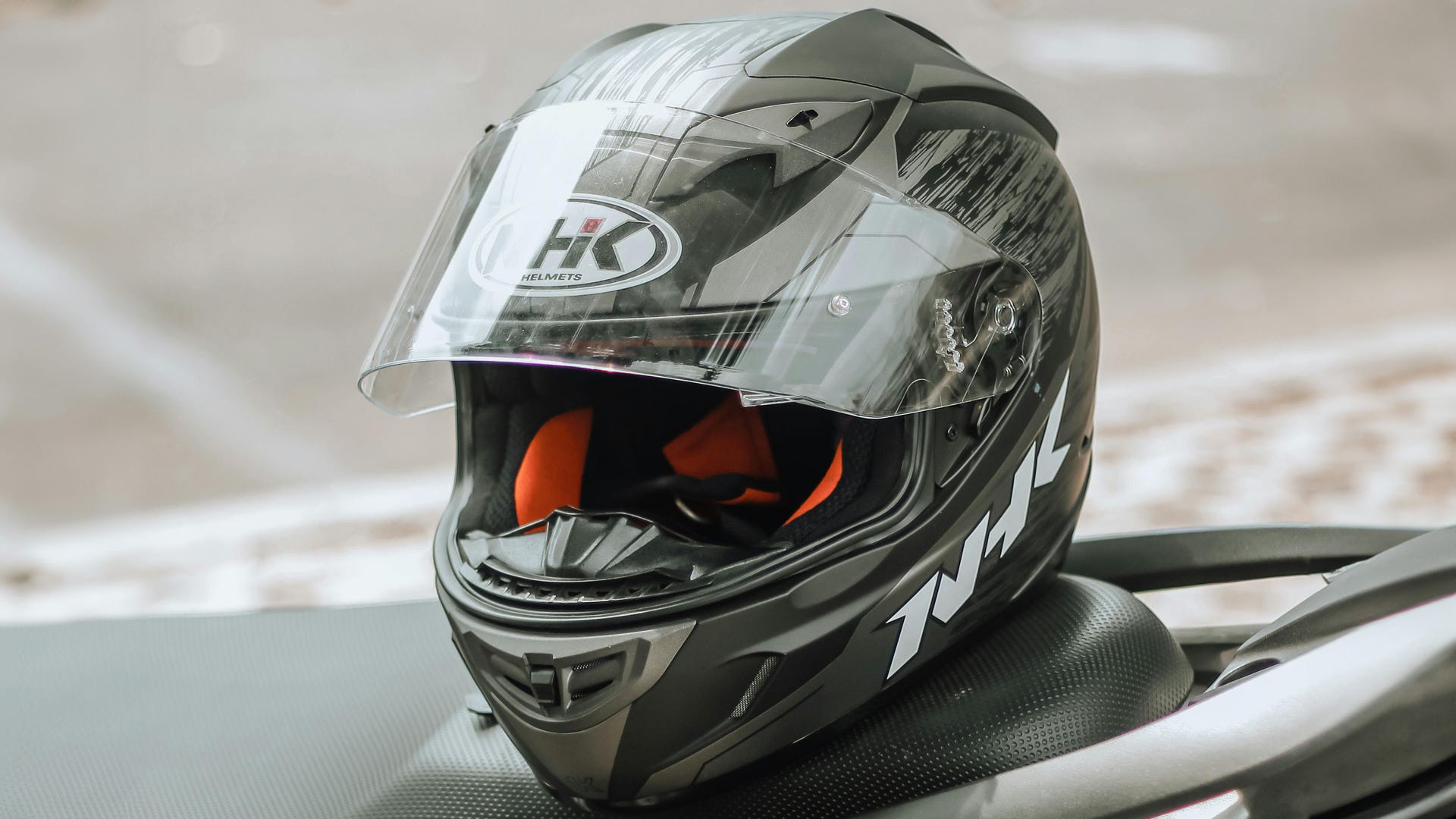
The Full-Face Helmet

The full-face motorcycle helmet is exactly what it sounds like. It offers protection from impact and abrasion from all sides and angles of the head. This type of helmet utilizes a flip-up visor to keep your eyes protected and your field of vision clear. The downside to this type of helmet is that it’s not the most convenient for access to the rider’s face. However, quality helmets include quick-release technology in case of an emergency. Full-face helmets are also great in the winter, but they will leave you with a sweaty face in the summer.
Full-face helmets are also fully compatible with communication headsets and usually have slots for in-helmet speakers. For a glimpse into motorcycle communications devices, check out my review on the Lexin B4FM Motorcycle Headset.
Out of all the options in this motorcycle helmet buyer’s guide, the full-face helmet remains the safest piece of gear that you can put on your head.
Pros:
- Full head and face protection
- Compatible with headset communication devices
- Ample sound dampening for loud noises of motorcycle riding
Cons:
- Limited face access
- Causes sweating in hot temperatures
The Modular Helmet

Convenient for when you need to wet your whistle for some hydration but you can’t or don’t want to remove your helmet. The modular motorcycle helmet is great for a lot of things, including getting air ventilation to a sweaty face on a sweltering summer ride. The swivel mechanism that allows the face of the helmet to quickly flip up offers a refreshing feeling that full face helmets can’t. Furthermore, there are no muffled communications between riders at a stoplight. You can just flip up the helmet face and speak to your buddy clearly, unlike with a full-face helmet.
However, due to the moving parts it takes for a helmet to provide the flip-face hinge function, this type of helmet weighs more than other helmets. Additional weight will cause more strain on the neck on long rides. Also, the open face function part of the helmet requires more upkeep than other helmet types.
In addition to that, another issue with these types of helmets is that they are not as structurally sound as full face helmets. Thus, modular helmets won’t hold up as well to protect the head on high-speed impact. This is again due to the swing-hinge moving parts of the helmet. But for local commutes and moderate-pace rides around town, the modular helmet provides more than enough protection.
Be sure to take full advantage of that flip-face technology and add a cup holder on your bike so you can conveniently take swigs of much-needed hydration whenever you come to a stop.
Pros
- Convenience
- Easy to cool face access
- Easy mouth to ear communication
- Full face and eye protection
Cons
- Heavier than other helmet types due to face-flip hinge mechanism
- Not as structurally secure against impact as a full face helmet
- Not as quiet as full face helmets
- More expensive than full face helmets
- More maintenance required
The Open-Face Helmet

This classic piece of headgear is as timeless and universal as a motorcycle helmet can get. For the fashion-minded motorcyclist, this open-face helmet will catch a lot of eyes and really bring out a well-put-together wardrobe of motorcycle gear. With that said, we all know high-fashion comes at a high cost. In this case, that cost isn’t money. Rather, the physical price you pay for having the gall to ride a motorcycle with an open face helmet.
Everything from insects to leaves and debris becomes flying projectiles darting at your vulnerable open face. With this retro helmet, you best wear a nifty pair of safety glasses or eye goggles and a face scarf. The elements also come into play. Rain, snow, dirt and sand are going to fly right into your face. You also most likely won’t have any modern helmet protection technology that comes with the full face and modular helmets.
Overall, the open face helmet is a good go between if you are not ready to commit to the confines of a full-face and aren’t wild enough to ride on the edge with a half-head helmet.
Pros
- Highly fashionable
- Provides plenty of cooling and ventilation
- Goes well with custom eye protection wear
- Provides adequate head protection
- Easy mouth to ear communication
Cons
- Face is vulnerable to projectiles and debris
- Not as ergonomic as full face helmets and modular helmets
- Not as protective as full face and modular helmets
- Most aren’t compatible with in-helmet headset speakers
- Not great for winter
- Not good in rain
The Half Helmet (Please Don’t Buy)

While not the safest helmet to wear on a motorcycle by far, the half helmet is better than wearing no helmet at all. And while it may provide a hot look to a good number of motorcyclists, the helmet does not provide any face protection or eye protection at all. Nor does it provide sound protection against raging exhaust pipes or the screaming headwinds pushing your head around when riding on the highway. These helmets are not aerodynamic in any sense. So, riding at highway speeds is very uncomfortable due to wind turbulence, and everything else flying at your vulnerable face. If you choose any style from this motorcycle helmet buyer’s guide, make sure this isn’t it.
The half-head helmet serves best for a local ride around town. NOT RECOMMENDED FOR HIGH WAY ANY HIGH SPEED RIDING.
Pros
- Breezy rides in the summer
- People can clearly see the beautiful mug of the wearer
Cons
- No face protection
- No eye protection
- Minimal head protection
- No sound dampening
- Not aerodynamic
- Unusable in the winter
- Not great in the rain
- Open to flying debris
- Lots of bugs will be swallowed
- Not good at high speeds
Choosing The Right Helmet For You

I get it. When you start looking for helmets, you’re going to go right for the coolest-looking one you see. But, before you click that buy button or swipe that plastic, take a look at all the safety features and comfort ergonomics that the helmet offers. Use this motorcycle helmet buyer’s guide and take notes. The last thing you want on your head is a great looking helmet that’s super uncomfortable with hardly any head protection. You’ll also want to look into modification and gadget compatibility as well as noise dampening. In addition to that, look at the aerodynamic features of the helmet. The shape and design of the helmet directly affects neck fatigue from taking long rides in forceful headwinds.
For a deeper look into the fundamental features of a what makes a good helmet good, check out my in-depth review of the Shoei SF-FR Motorcycle Helmet.
Whatever helmet you choose to pop your precious head into, make sure the helmet that you buy has a DOT-approved sticker in the US or an ECE approved sticker for those riding around Europe. If you choose the path of the half helmet, ratings don’t apply, and you probably don’t care about keeping your head safe that much anyway. If you have access to a motorcycle shop, pop in to try on some helmets and talk to the employees. They’re riders too and they’ll be more than willing to help you find the right helmet for you.
Notable Motorcycle Helmet Brands To Buy From
Good luck and keep that noggin safe. If you enjoyed this motorcycle helmet buyer’s guide, check out another article on motorcycle jackets. Also don’t forget to subscribe to my YouTube and add me on Instagram. And as always, ride safe out there.
Signing off,
MotoReveries
More Motorcycle Gear Content
📦 Affiliate Disclosure:
Some of these links are affiliate links — if you click and buy, I may earn a small commission at no extra cost to you. It helps support the channel and future content 🙌
Share

About the Author
MotoReveries is a motorcycle tech reviewer, gear tester, and ride-focused content creator. He has written for TopSpeed and regularly produces hands-on product reviews, install guides, and ride-tested impressions tailored to real riders.
📌 Subscribe so you don’t miss any of my useful motorcycle reviews, installations, and tutorial guides.
📩 Business Inquiries: 📧 motoreveries@gmail.com